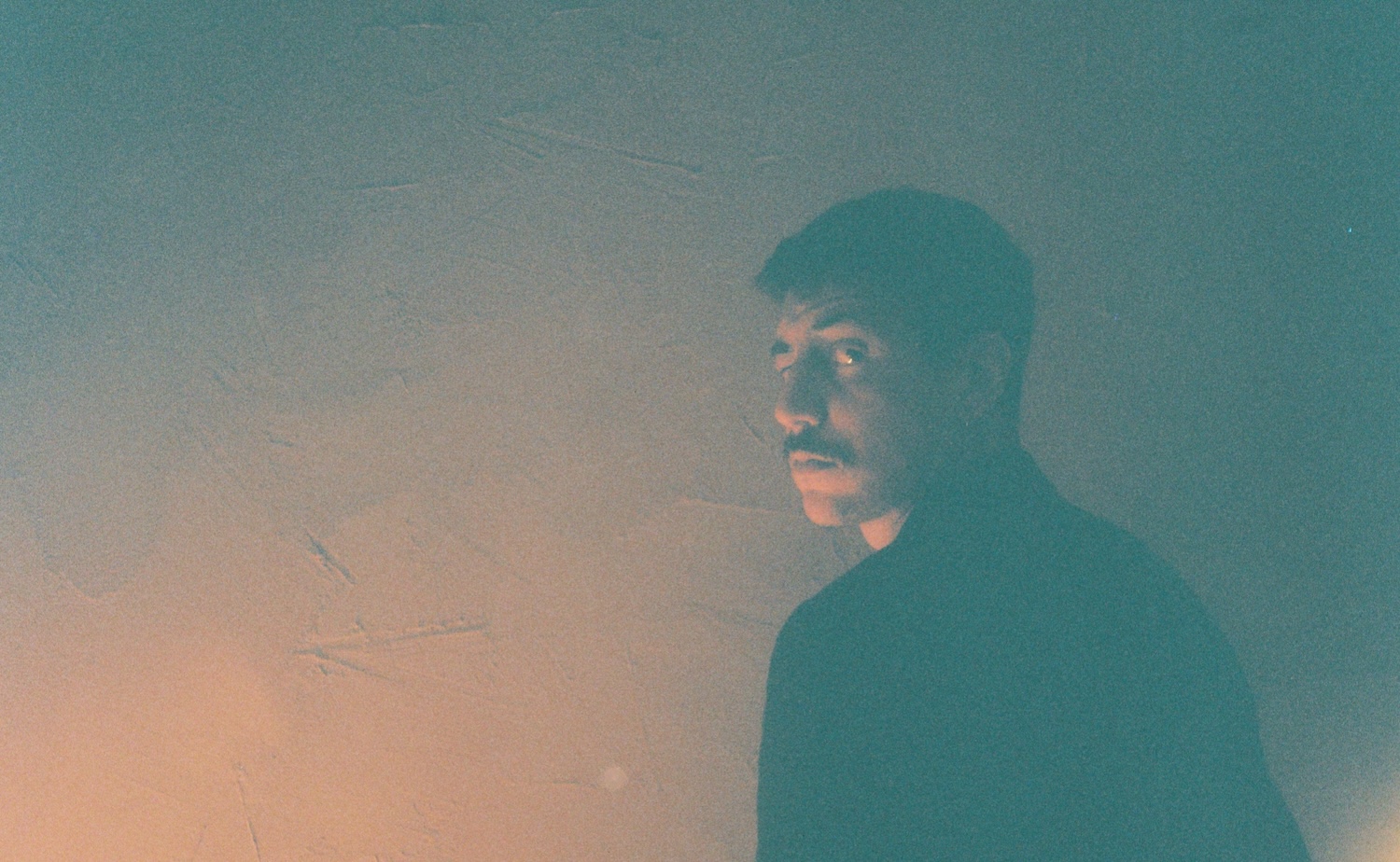
“Lo Amiti” (אמיתי לא / Not Real) is the title and centerpiece of the upcoming sophomore album of the Haifa-born artist Guy Offenbach. Borrowing its name from the Hebrew phrase for “unreal” or “fake”, the record serves as a coming-of-age story told through the dusty lens of 1950s pop, abstract surf rock, and low-fidelity ambient post-punk. It is about returning to the city of one’s youth to confront the ghosts of the past, only to realize that the memories themselves have begun to feel like hazy, cinematic fictions.
The central theme is articulated from multiple different angles, shifting between a deadpan, post-secure irony and moments of bruising sincerity. grapples with the exhausting routine of modern life and the performance of getting over loss, treating personal tragedies with a cool, cynical detachment. Meanwhile, strips away this defensive armor entirely, serving as a vessel for the raw feelings of isolation and longing that linger beneath the surface. Throughout the record, the city of Haifa itself acts as a main character, its thick coastal humidity and concrete steps forming the backdrop for imaginary love stories and cyclical heartbreak.
Musically, the album is a love letter to the warm, saturated tape hiss of mid-century underground recordings. To capture this specific mood, the entire album was recorded analog on a dusty four-track tape machine in a dark, slightly stinky room in Haifa’s Hadar neighborhood. The resulting sound is heavily inspired by the pioneering, space-age production of Joe Meek, dripping with wet spring reverbs, slow-dance doo-wop tempos, and abstract rock and roll. There are also distinct echoes of Charlie Megira’s retro-futurist, vampire-surf aesthetic and Israel’s old-school underground scene. Overall, Not Real leaves the listener with a bittersweet cocktail: a deep, pseudo-intellectual understanding that nothing actually changes in the instant-gratification, one-minute format of modern life, but that there is still a quiet beauty to be found in the loop.
Guy Offenbach was born and raised in Haifa, Israel, where he collected his first childhood memories and formative experiences among the steep, winding city streets. As a teenager, feeling suffocated by the heavy routine of his hometown, he fled to Tel Aviv and later to Berlin, spending years playing in chaotic punk and surf bands. After years of chasing new scenes, navigating a cycle of successes and failures, he completed a full circle, returning to the exact place he was born. This return sparked a mature, retrospective look at his past, culminating in the creation of “Not Real” – an album that approaches unresolved childhood baggage with a sharp, ironic distance, looking at old memories as if they never happened at all.